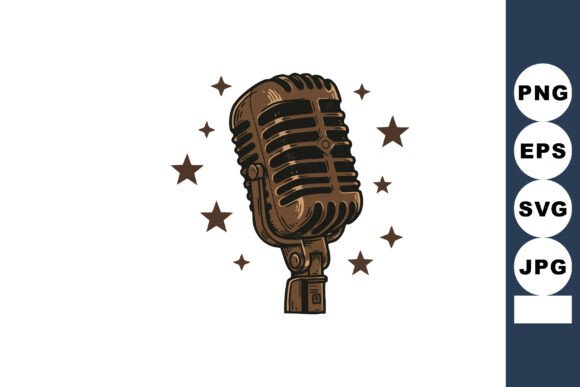
Vintage Microphone with Decorative Stars: Retro Charm for Modern Design
There's a certain magic in the crackle of an old record, the warm hum of a tube amplifier, and the iconic silhouette of a classic microphone. It evokes an era of jazz clubs, radio dramas, and timeless broadcasting. The Vintage Microphone with Decorative Stars illustration captures this exact feeling, bottling the essence of retro cool into a versatile design asset. This isn't just a simple clipart; it's a mood, a style, and a powerful visual tool for creators looking to inject personality and nostalgia into their projects.
At its core, the asset features a meticulously drawn vintage microphone, likely inspired by models from the 1940s and 50s, known for their robust, rounded grilles and sturdy stands. Surrounding this central icon are decorative stars, adding a layer of playful, celebratory energy. The entire composition is rendered in a cohesive brown tone palette, which immediately establishes a warm, aged, and artistic mood. This monochromatic scheme isn't a limitation—it's a strength. It ensures the illustration integrates seamlessly into various color schemes without clashing, while the brown tones themselves suggest wood, leather, and aged paper, reinforcing the vintage aesthetic.
Where This Retro Illustration Truly Shines
The personality of this design asset is unmistakable: it's nostalgic, artistic, slightly whimsical, and inherently cool. Its appeal lies in its ability to communicate a specific vibe instantly. For a logo design project for a podcast about music history, a jazz café, or a vintage audio equipment repair shop, this illustration could serve as the perfect central motif or a distinctive icon. In editorial design, it can grace the cover of a magazine feature on retro culture, decorate the chapter headings of a book on 20th-century entertainment, or add flair to a blog post about classic recording techniques.
For packaging design, imagine this illustration on the label of a craft coffee brand that roasts beans "old-school style," or on the box of a specialty cocktail mixer. It tells a story before the product is even opened. In the digital realm, its applications are equally broad. It can become a standout element in social media graphics for a musician's album launch, a unique favicon for a creative studio's website, or part of a header image for a web design project targeting a niche audience that appreciates authenticity. Crafters and hobbyists will find it perfect for vinyl decals, t-shirt prints, or scrapbooking, adding a touch of artistic flair to personal projects.
Practical Guidance for Using This Design Asset
While this is an illustration and not a typeface, its role in a design system is similar to that of a display font—it's meant to grab attention and set a tone. When integrating it, think about how it influences visual hierarchy. Its detailed, decorative nature means it should often be a focal point. Pair it with cleaner elements to create balance. For instance, a bold, clean sans serif font for headlines can provide a modern counterpoint to the illustration's ornate vintage feel, creating a dynamic and readable layout.
The downloadable ZIP file containing SVG, EPS, JPG, and PNG formats is a practical godsend. The vector files (SVG, EPS) are essential for professional use. They allow you to scale the illustration to any size—from a tiny favicon to a large banner—without losing a single speck of quality. The JPG and PNG files are ready for immediate use in digital applications, presentations, or documents where vector editing isn't necessary. This range of formats ensures the asset is ready for both print and digital workflows, making it a valuable part of any designer's toolkit.
Before using it commercially, always review the specific license included with your download. Most licenses for such assets are quite permissive for commercial projects, but it's due diligence to confirm. Test how the brown tones interact with your chosen color palette. Does it need a slight adjustment to match your brand's specific hue? Can you overlay a subtle texture to enhance its vintage feel further? The best results come from treating this illustration not as a standalone image, but as an integrated component of your broader brand identity or design language.
Font Pairing and Stylistic Harmony
Even though it's an image, thinking in terms of font pairing principles helps. This illustration has a strong personality, so the typography you pair with it should either complement or intentionally contrast it. A script font or a handwritten font with a retro flair could amplify the nostalgic mood for a cohesive, thematic look. Conversely, a clean, geometric modern typography style in a sans serif font can ground the design, making it feel contemporary and accessible. Avoid pairing it with other overly ornate or competing serif fonts, which could create visual noise and reduce readability.
Ultimately, the Vintage Microphone with Decorative Stars is more than just a pretty picture. It's a strategic design asset that communicates heritage, creativity, and a love for the classics. By understanding its visual language and applying it thoughtfully, you can leverage its retro charm to create designs that are not only beautiful but also deeply resonant with your intended audience. It’s a testament to how a single, well-crafted image can become a cornerstone of visual storytelling.